
New Culture secures approvals for cheese production
Monday, Nov 16, 2026
Important update from New Culture! We received the necessary approvals from the California Department of Food and Agriculture (CDFA) to produce our animal-free dairy mozzarella. This is the world's first-ever production permit for animal-free dairy mozzarella, which we'll produce in our new, CDFA-approved commercial facility in the Bay Area. CDFA's review included an extended and thorough evaluation of the safety and controls of our manufacturing process and suitability of our facility and product label.
The approval itself has three components: 1) the production process for our animal-free dairy mozzarella 2) the commercial facility in the Bay Area where we’ll be manufacturing our cheese and 3) the official product label. Taken together, these three components are essential building blocks toward commercialization. Keep reading to learn more about each one.
--
When it comes to making New Culture mozzarella, there are two parts to the process: first, we produce our animal-free casein protein, then we turn that protein into animal-free dairy cheese. Both parts have required the New Culture team to make technical breakthroughs and scientific discoveries while also relying on time-tested and industry standard manufacturing techniques. In that sense, what we’re doing is both new and old, innovative and enduring.

That’s why, in order to secure the approvals to manufacture our product in California, we could follow CDFA’s standard approval process for cheesemaking. However, since we’re making the world’s first animal-free dairy mozzarella, we had to provide several rounds of detailed information to CDFA about our product, process, production facility and product label.
Production Process
CDFA is focused on ensuring the safety of the production process for any product manufactured in California. When it comes to dairy, they want to understand each step, from the ingredients making up the product to how those ingredients are combined to the equipment being used as well as safety controls and replicability. CDFA places a particular focus on food safety and product quality and the “critical control points” (CCPs) that ensure product safety. As questions arose from the CDFA team, we worked hard to explain the ins and outs of our production process including how our approach to cheesemaking mimics the conventional approach for low-moisture mozzarella.
These conversations could get quite detailed. For instance, we explained the nuances of how we plan to cool our cheese, the packaging materials and features we selected (e.g. closing vs. sealing the materials), and sterilization steps to ensure cleanliness of the production equipment. CDFA’s questions led to productive and important discussions, and even led to a few clever tweaks in our process that we hadn’t previously considered.
Commercial Facility
The second component of the CDFA approval is the commercial facility where we’ll be producing our cheese. CDFA requires dairy alternatives to uphold the same rigorous standard of facility design and sanitation as they do for animal-derived dairy. For instance, it is critical to be able to efficiently and fully clean every wall of the production space. CDFA required minor upgrades as a result to improve the cleanability of our space. We even learned about different types of ceiling vent design, landing on the most appropriate option in order to enable smooth air circulation.
The flow of materials through the space (and before materials even arrive) is also an important input for CDFA, including supplier verification, ingredient receiving, storage and “chain of custody,” ensuring we know the whereabouts and oversight of all inputs from beginning to end. Thorough, regular and consistent inspections of materials are baked into how we’ll use the space along with ongoing logging to monitor shelf life, allergen considerations, and any temperature sensitivities. Since we’ll have room temperature, frozen, and refrigerated storage, we needed to outline what would be stored in each environment and how we would keep each environment locked except when needed.
Product Label
Though most consumers might not realize it, product labels for packaged foods must adhere to quite a sophisticated and rigid framework. This covers the content included on the label as well as the design of the label itself (e.g. font sizes and location of specific content). Per the regulatory requirements, product labels must include the product name, an ingredient list, a “nutrition facts panel” (NFP), relevant allergen statements, and company information.
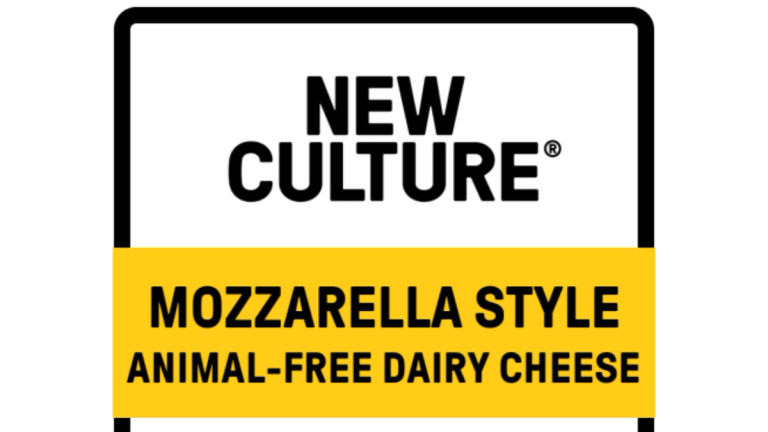
While certain elements of our label submission were straightforward (e.g. the ingredients list and NFP), others were a bit trickier given the lack of an industry precedent. In particular, the official product name and how our casein would be named on the ingredients list. Ultimately, CDFA approved “Mozzarella Style Animal-free Dairy Cheese” as the official product name and “Animal-free casein (from fermentation)” as the ingredient name. These two names follow the existing naming conventions while clearly communicating what’s important for consumers to understand about them.
All-in-all, what’s the most important part of these approvals? Getting one step closer to bringing our cheese to pizza lovers everywhere.